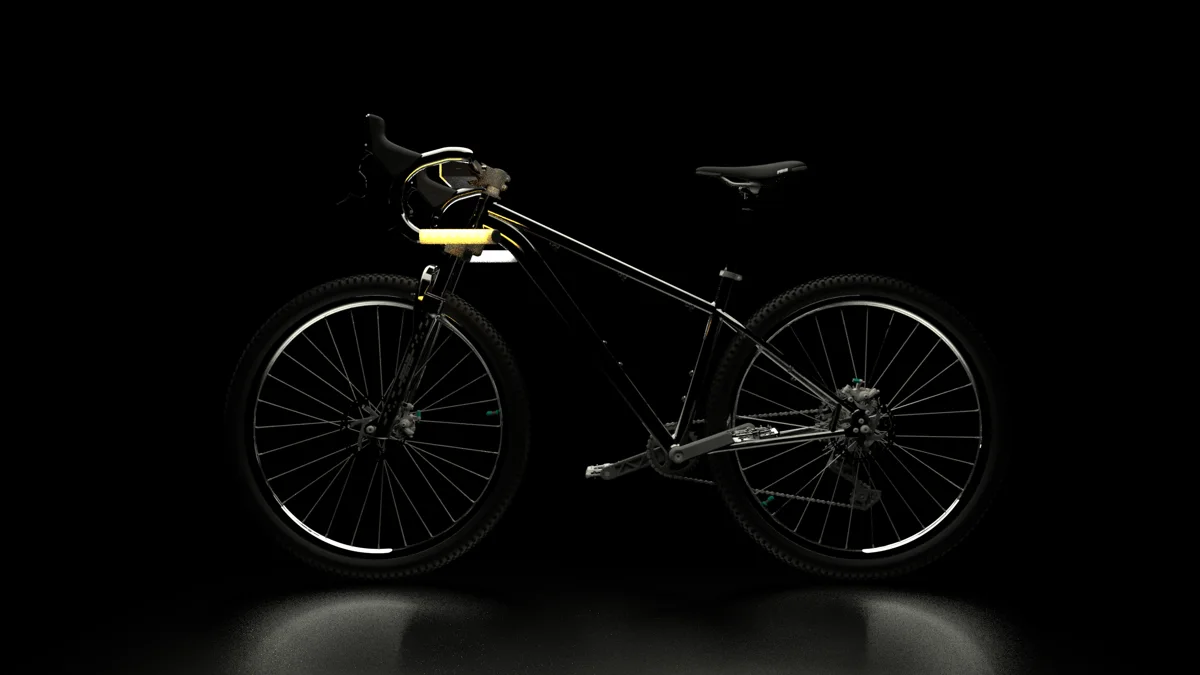
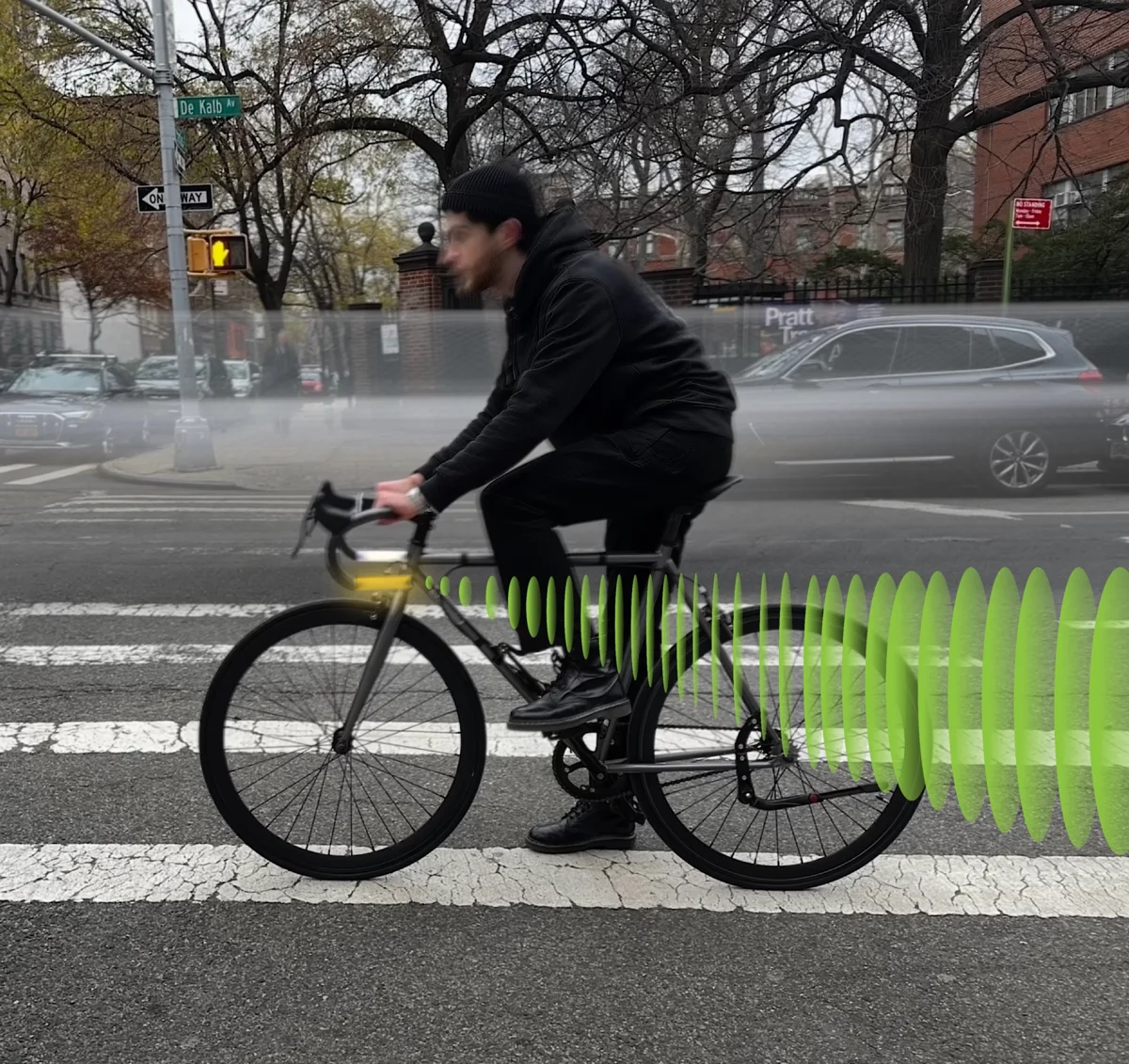
BikeSense is an urban safety concept handlebar developed in collaboration with a partner, integrating ultrasonic sensors, haptic feedback, and LED indicators to enhance cyclist awareness. The project covered ideation, CAD, prototyping, and full tech integration.
In collaboration with Brooks Butler.

Problem
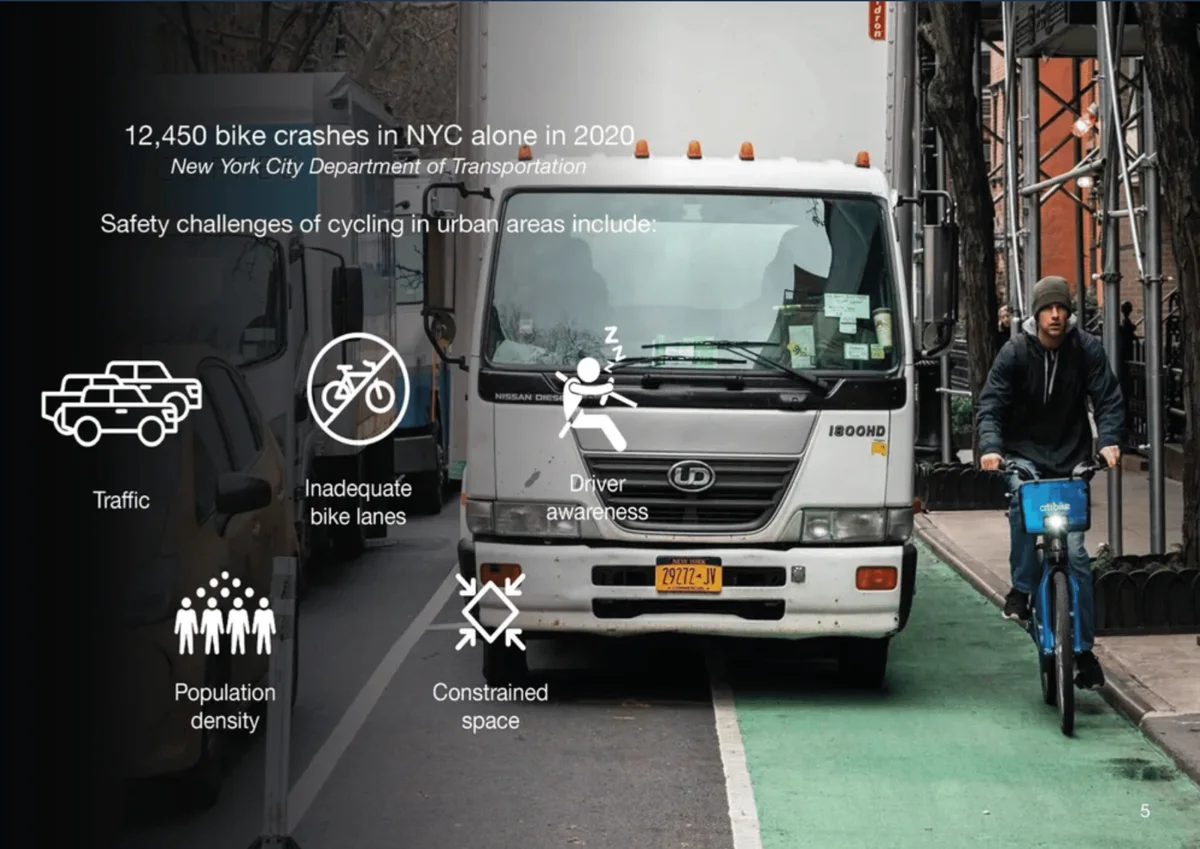
Cycling in urban environments presents pressing safety challenges stemming from factors such as heavy traffic, inadequate bike lanes, driver awareness gaps, high population density, and constrained space.
Design objective
BikeSense aims to create a bike handlebar for increasing biking safety. It will improve cycling awareness amongst the rider and the surrounding environment, reducing accidents in urban environments.
The bike accessory industry is very competitive, so for a successful product it must be intuitive, designed well, and built to last. People are willing to spend a premium if it delivers.
Observation
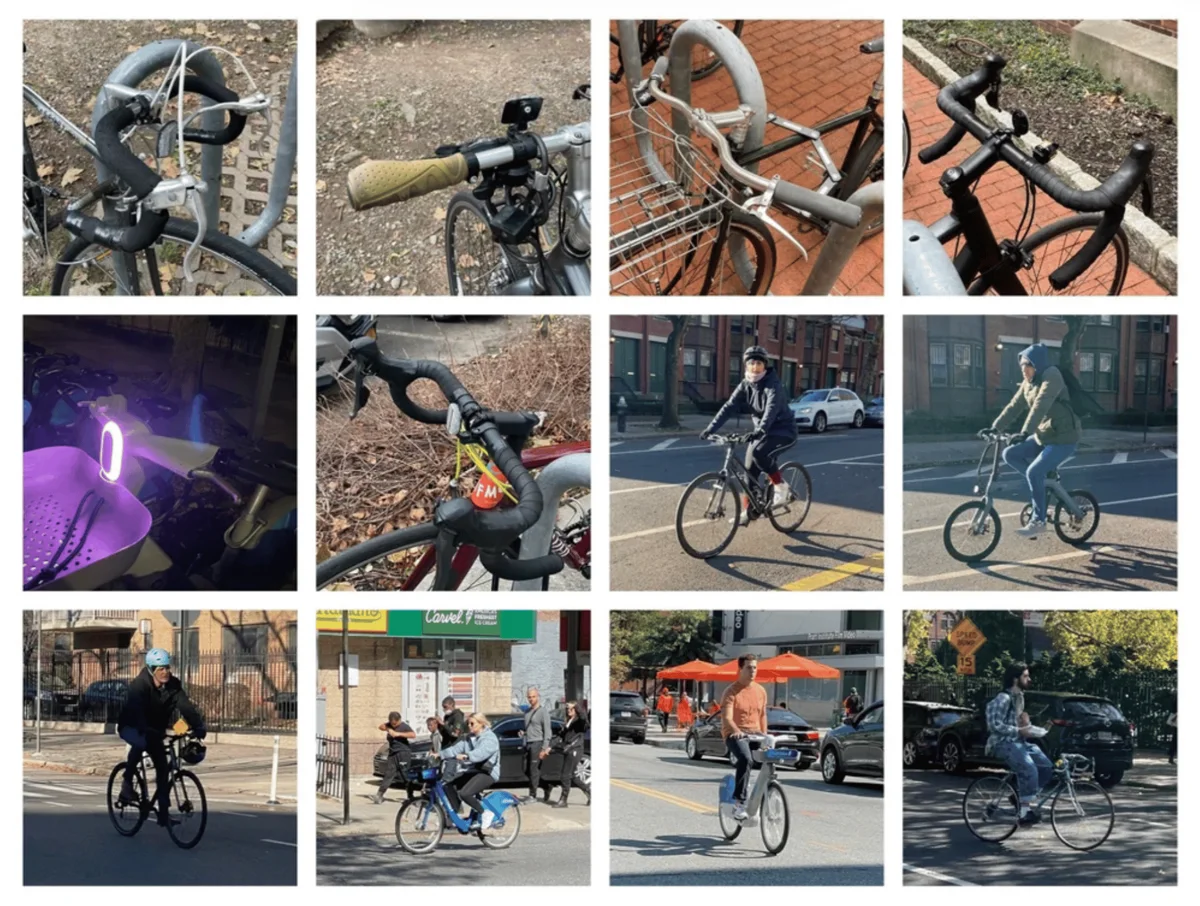
We observed several riders in the city to understand how they were using their bikes and the concerns they have with their experience. We recorded this information in the form of interviews.
"Cars do not see me at night when biking home from work so I tend to wear a bright colored bag with reflective material. I attached a red blinker to my bike, but the battery dies out and requires a tool to replace."
Marcus, commuter, fixed gear bike
"When biking in the city I try to use protected bike lanes, mainly because drivers do not see me turning at intersections, which I feel is the area most prone to causing an accident."
Blake, commuter and exercise, sport road bike
"Since I do not live in the city, I have to rely on my phone for directions. It is all kinda overwhelming especially while trying to stay safe and keep my eyes on the road."
Sarah, leisure biker, Citi Bike
"I recently got into an accident with a moped in the bike lane. The streets here and even the bike lanes are unpredictable and I wish I had more time to react."
John, avid biker, hybrid
Interview takeaways
Handlebars
The easiest thing on a bike to install. Standard tube widths mean a universal user.
Familiarity
Riders adjust a handlebar relatively easily to their comfort level.
Drop handlebars
Allow different hand positions, which helps on longer distances when the body gets fatigued.
Existing solutions
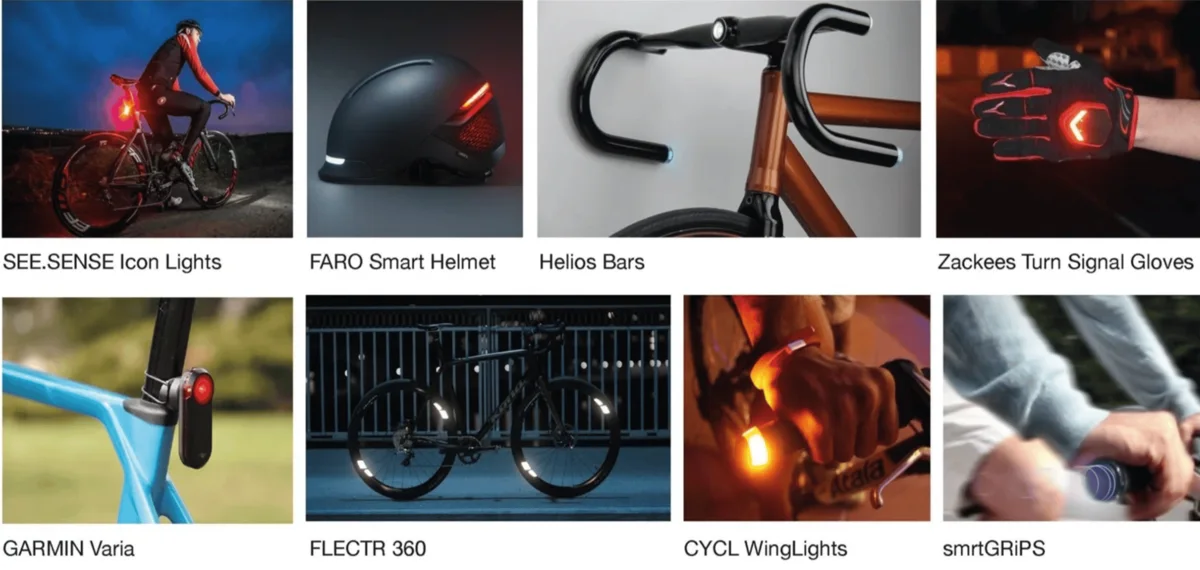
We looked at a variety of existing handlebars and accessories to understand different forms for different applications, including kinetic accessory companies like PedalCell, which use kinetic energy to power devices on the go.
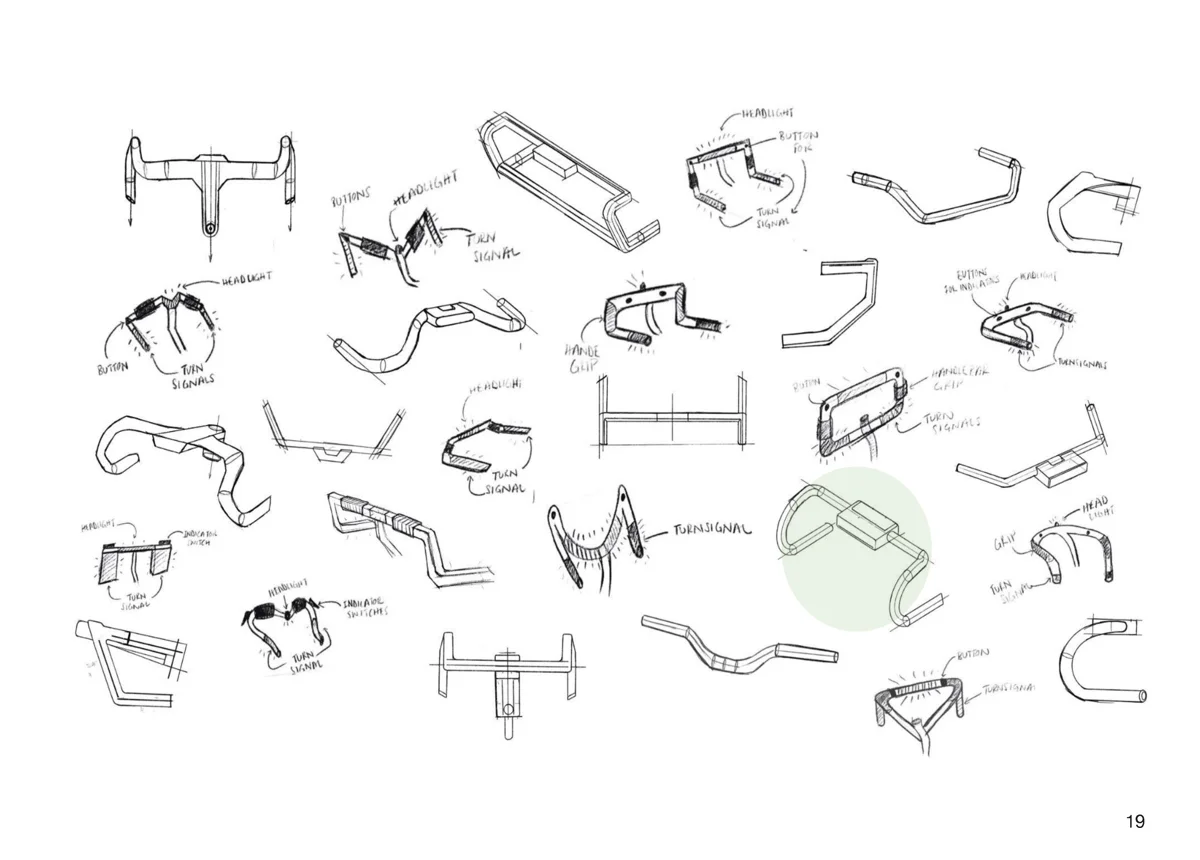
Types of handlebars
Ideation sketches
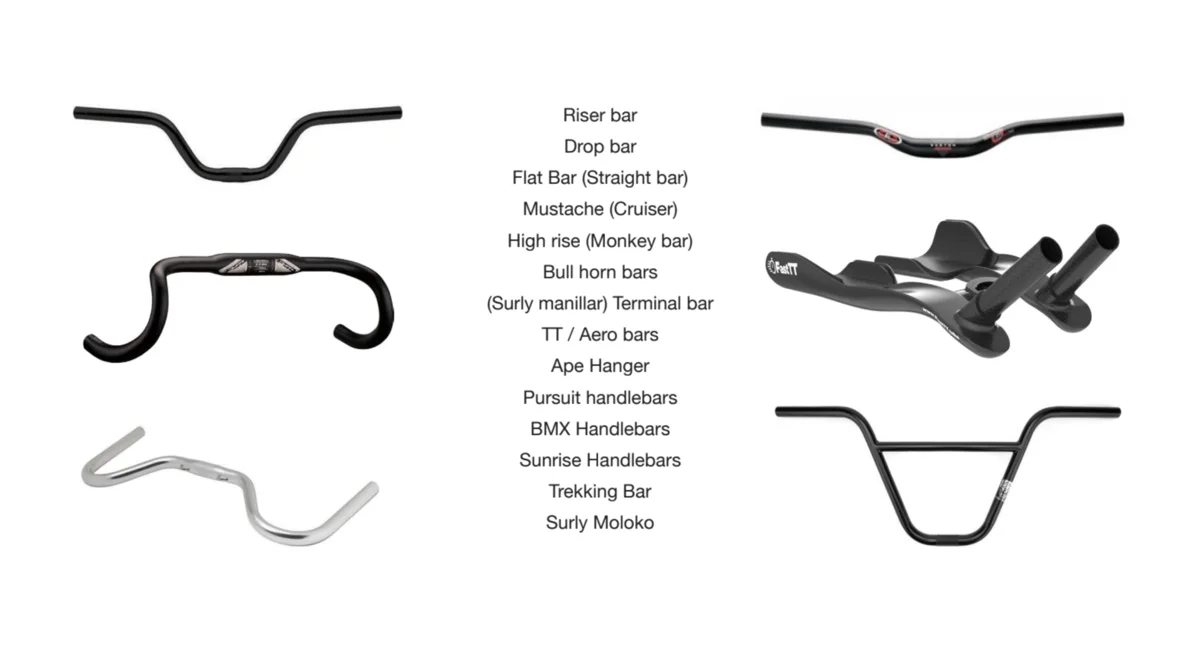
Ideation sketches guided our process and provided a sense of direction for the form of the handlebar. Green highlights indicate the sketches we chose to move forward.
Sketch models
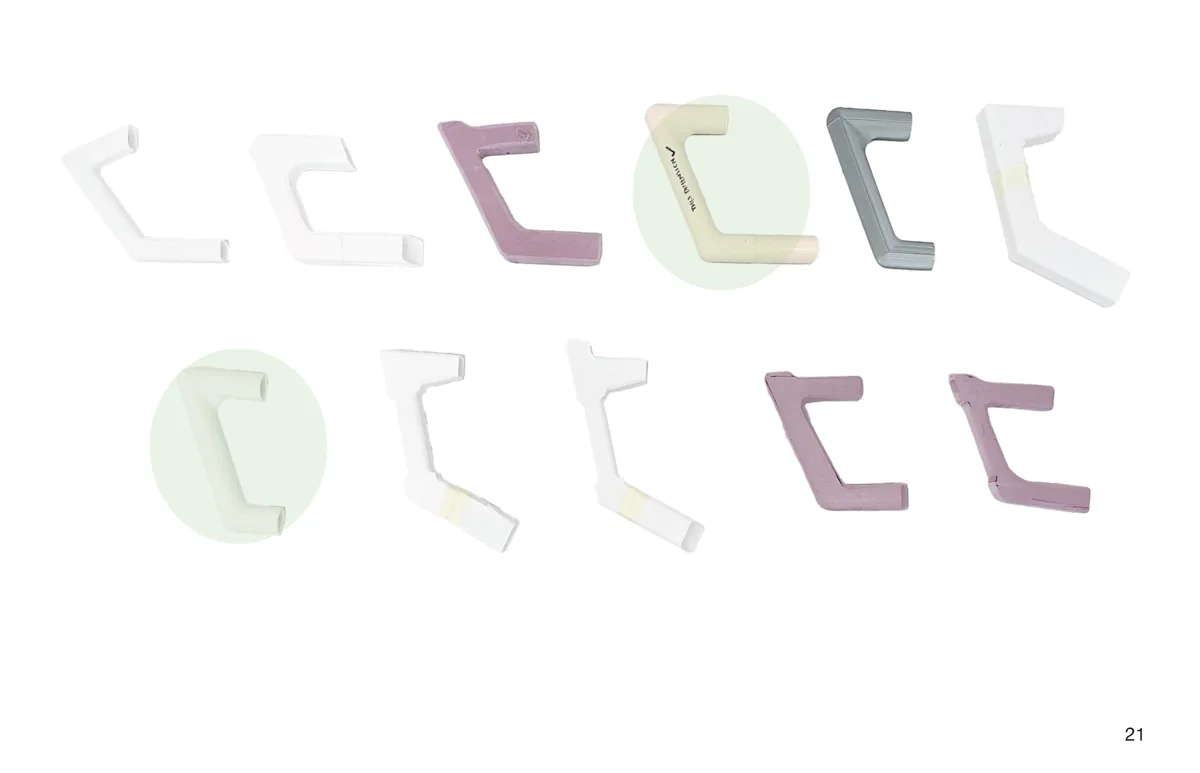
Handle designs to test out form, scale, and ergonomics. Green highlights indicate the models we chose to move forward.
Conceptualization
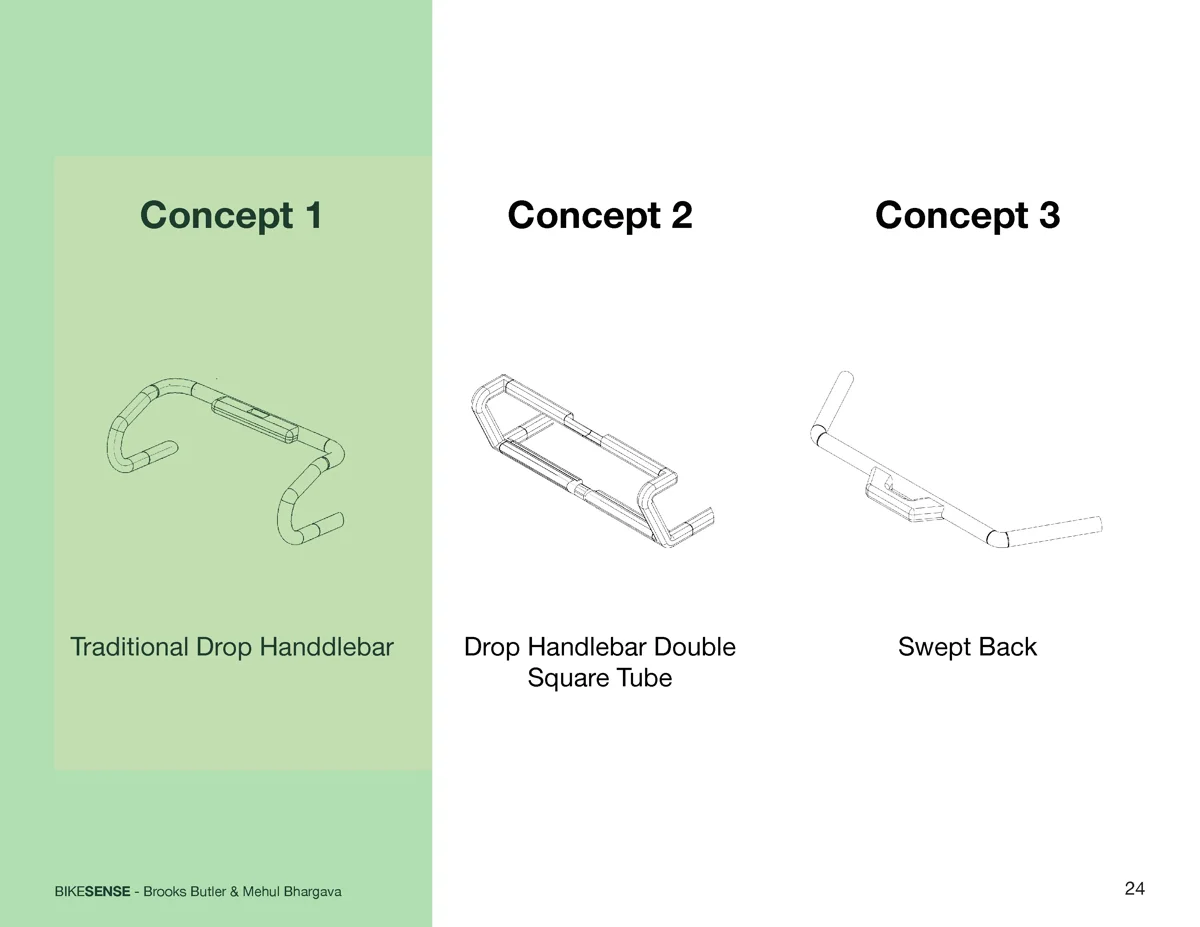
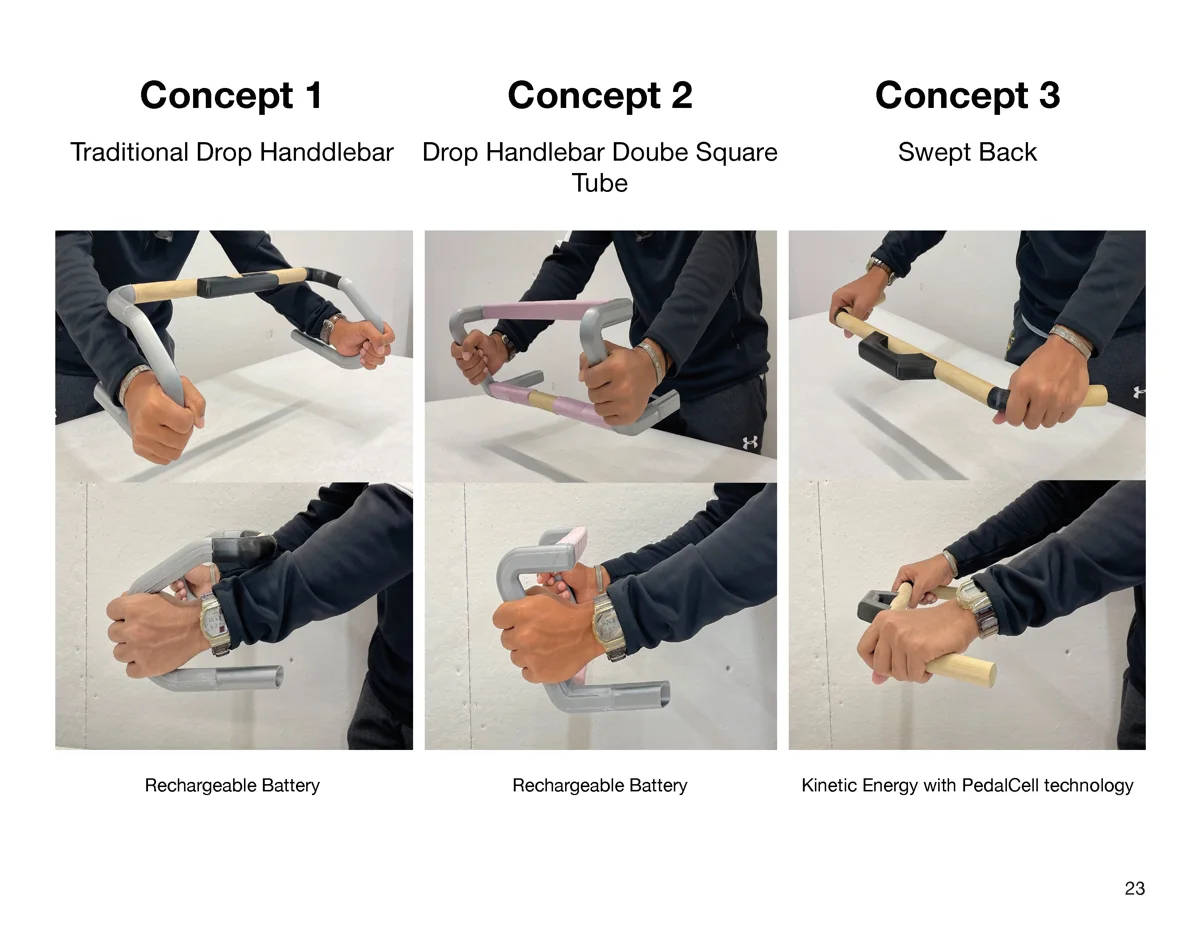
Based on our research, sketches, and sketch models, we conceptualized and visualized three main ideas: a traditional drop handlebar, a drop handlebar with a double square tube design, and a swept back design. This step helped us decide what is right for intent and purpose.
- Concept 1, traditional drop: simple, ergonomic, more surface area to grip.
- Concept 2, double square tube: innovative design, more space for electronics, natural angle for sensors.
- Concept 3, swept back: kinetic charging, more space for electronics.
- Concept 1: less stability, lesser space for electronics.
- Concept 2: complex design, wider than drop handlebars.
- Concept 3: bulky, electronics harder to install due to its organic nature, longer installation time due to the kinetic generator.
Technology
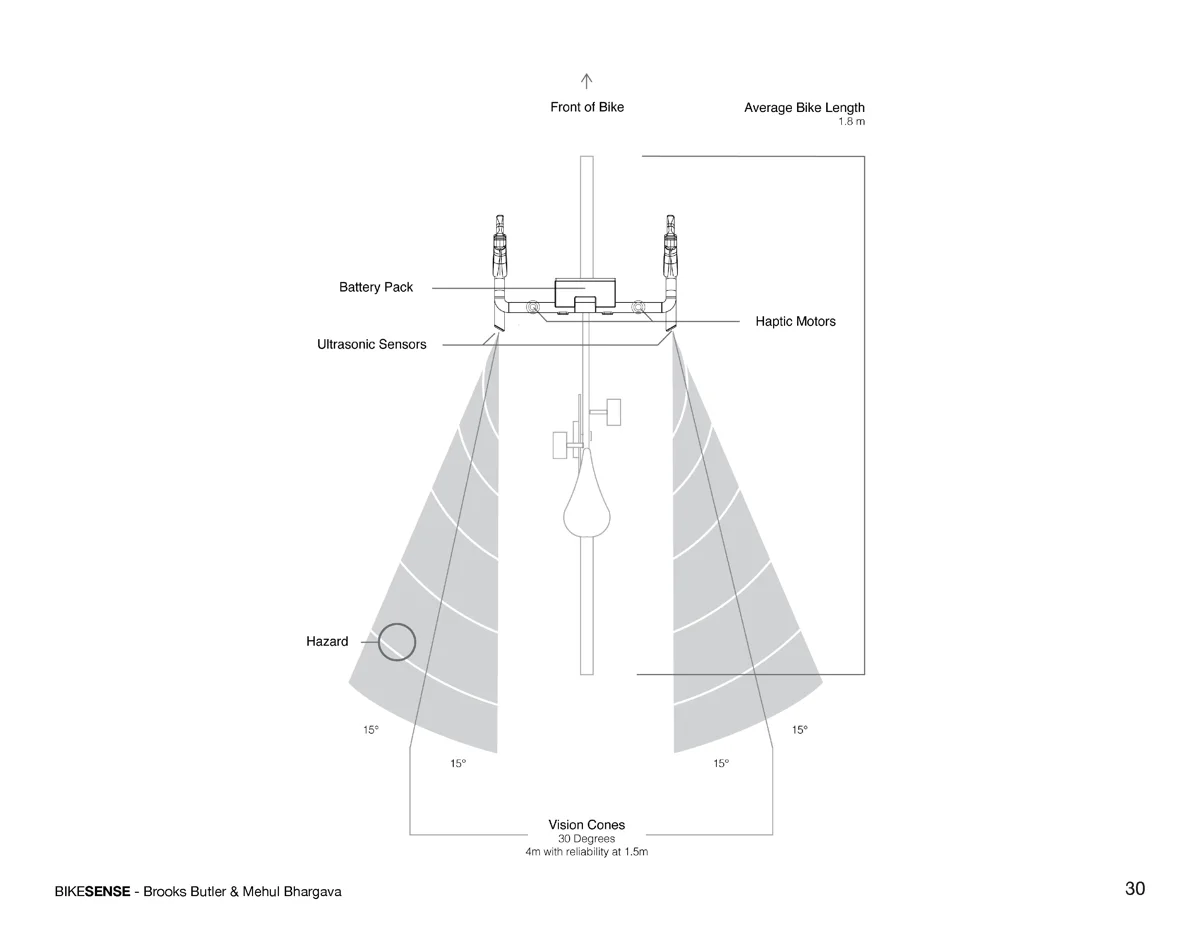
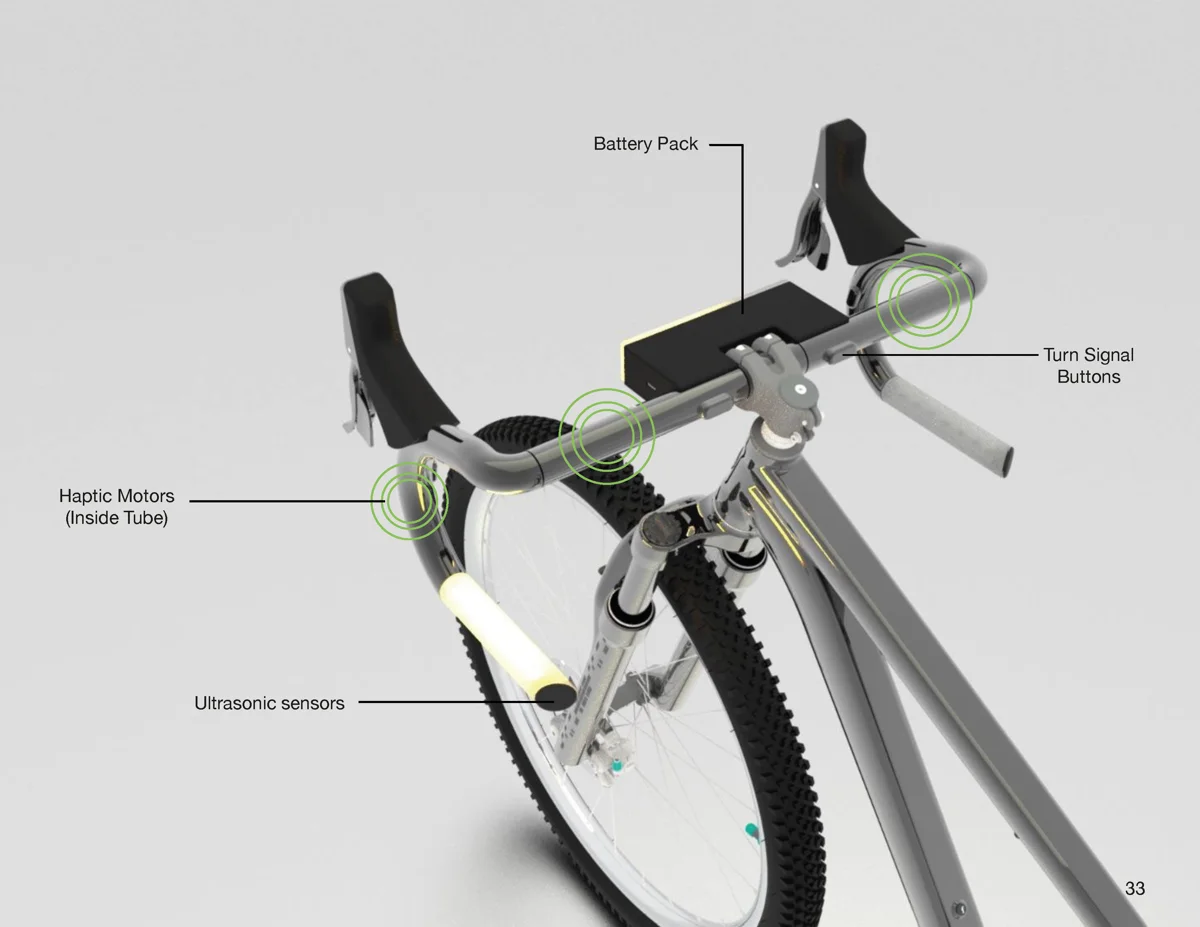
Ultrasonic sensors detect obstacles close by. Haptic discs notify the rider about obstacles. An Arduino powers everything, with a rechargeable battery pack.
Based on our testing, if an object is detected within 4 m, with more reliable results at 1.5 m, the haptic motors on either or both sides are activated. The rider receives a constant haptic vibration as the object gets closer.
Tech schematic
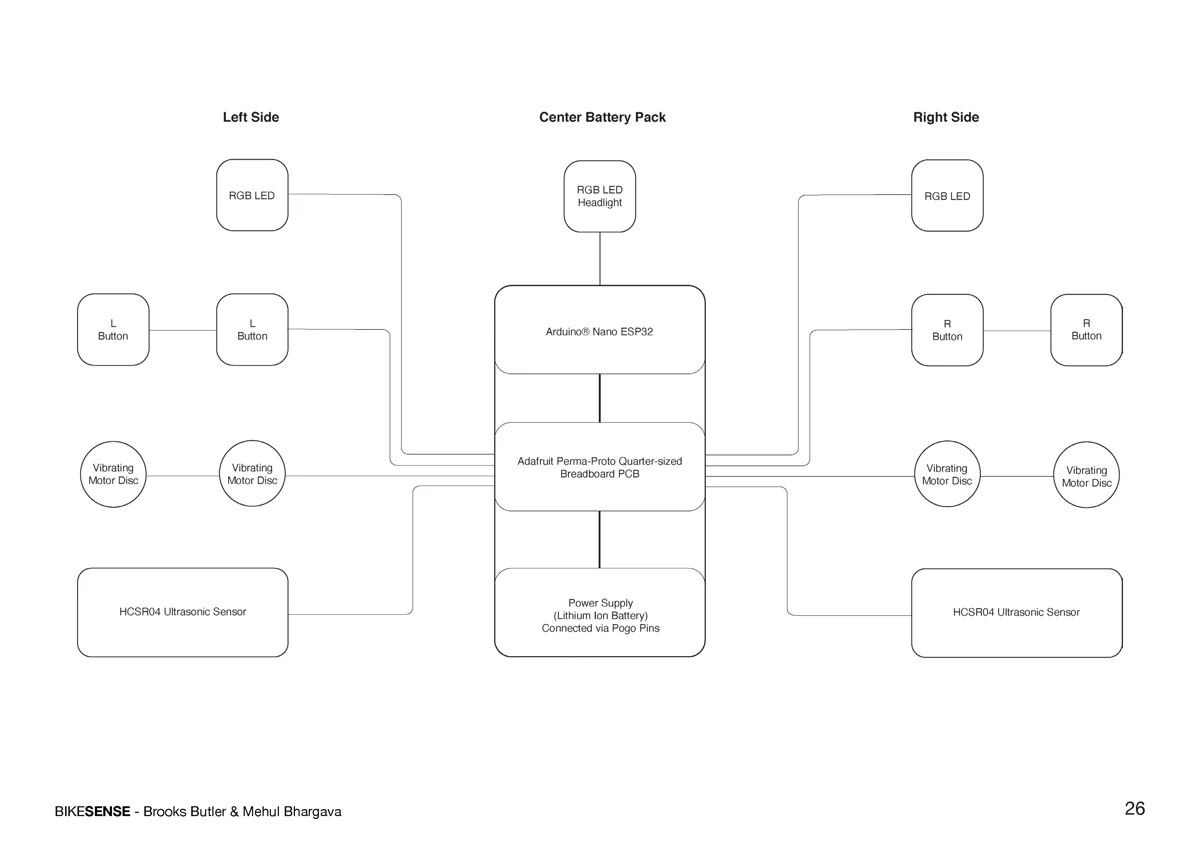
This diagram illustrates the overall technology needed to implement the blind-spot detection system as well as lighting in the handlebar. The system is divided in two. Both the right and the left sides have two buttons to activate the turn signals as well as two haptic motors, which are activated based on the data analyzed through the microcontroller.
Functional model
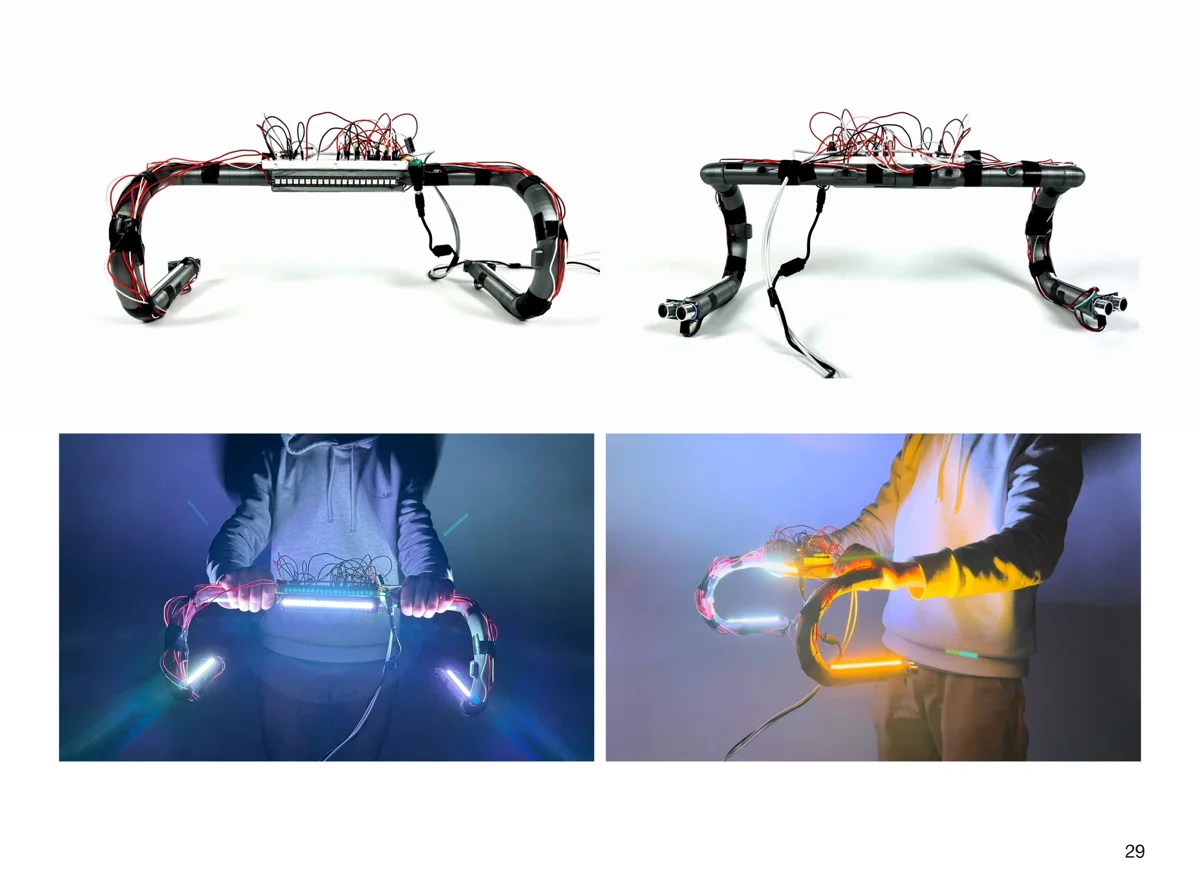
The build process was a long one. From coding using Arduino IDE and designing CAD files in Solidworks to 3D printing various prototypes to best fit our needs, acquiring different electronics, and consulting engineers to make a functioning model to prove our concept.
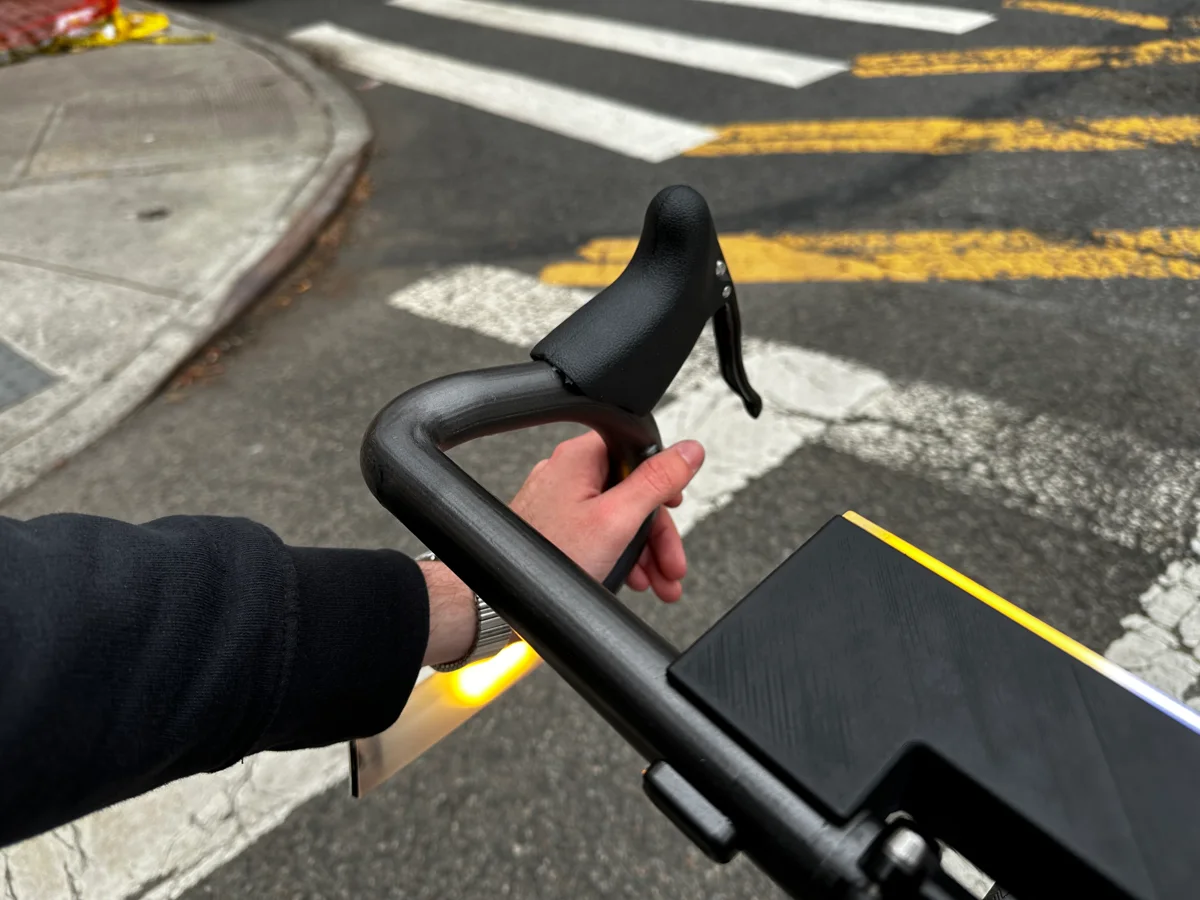
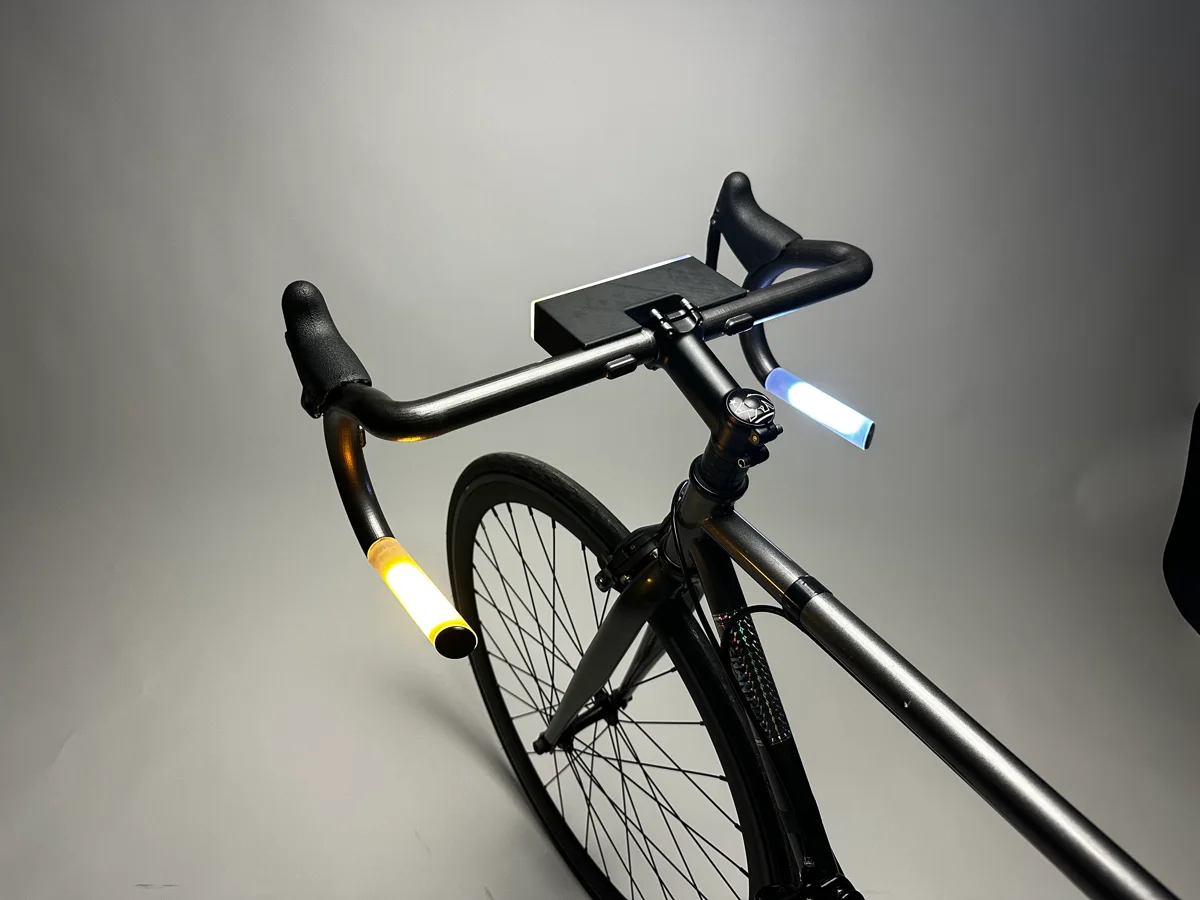
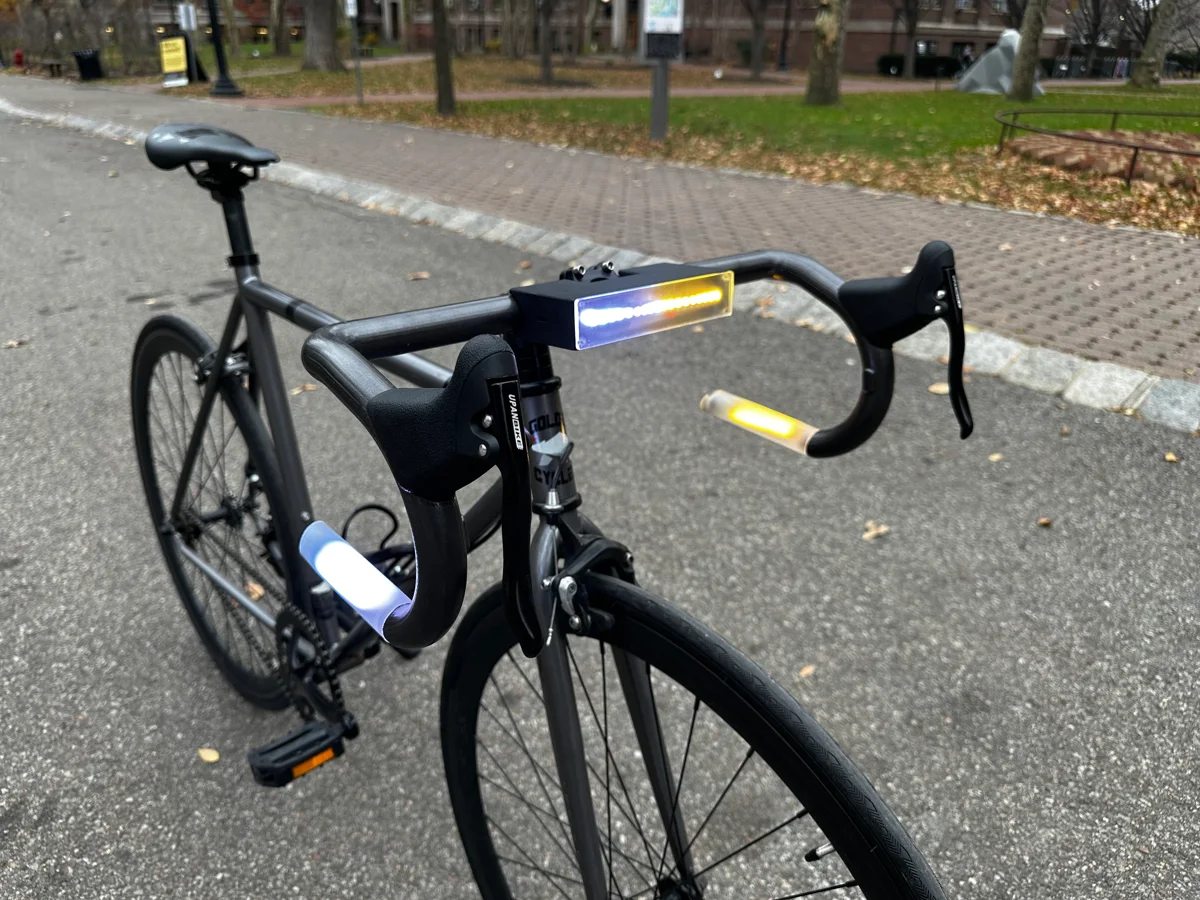
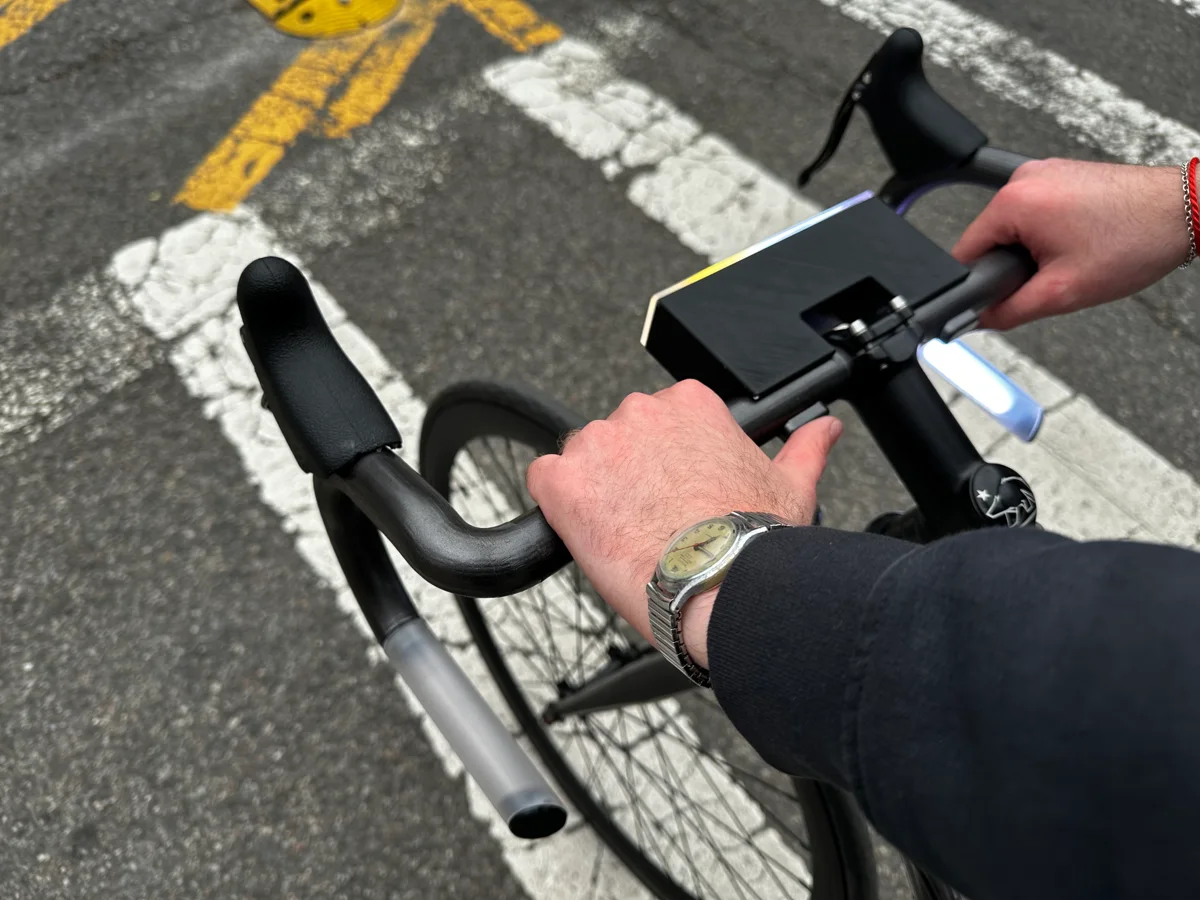
This is our functional model. Using the schematic we integrated all technologies mentioned previously: LEDs, ultrasonic sensors, haptic motors, and buttons.
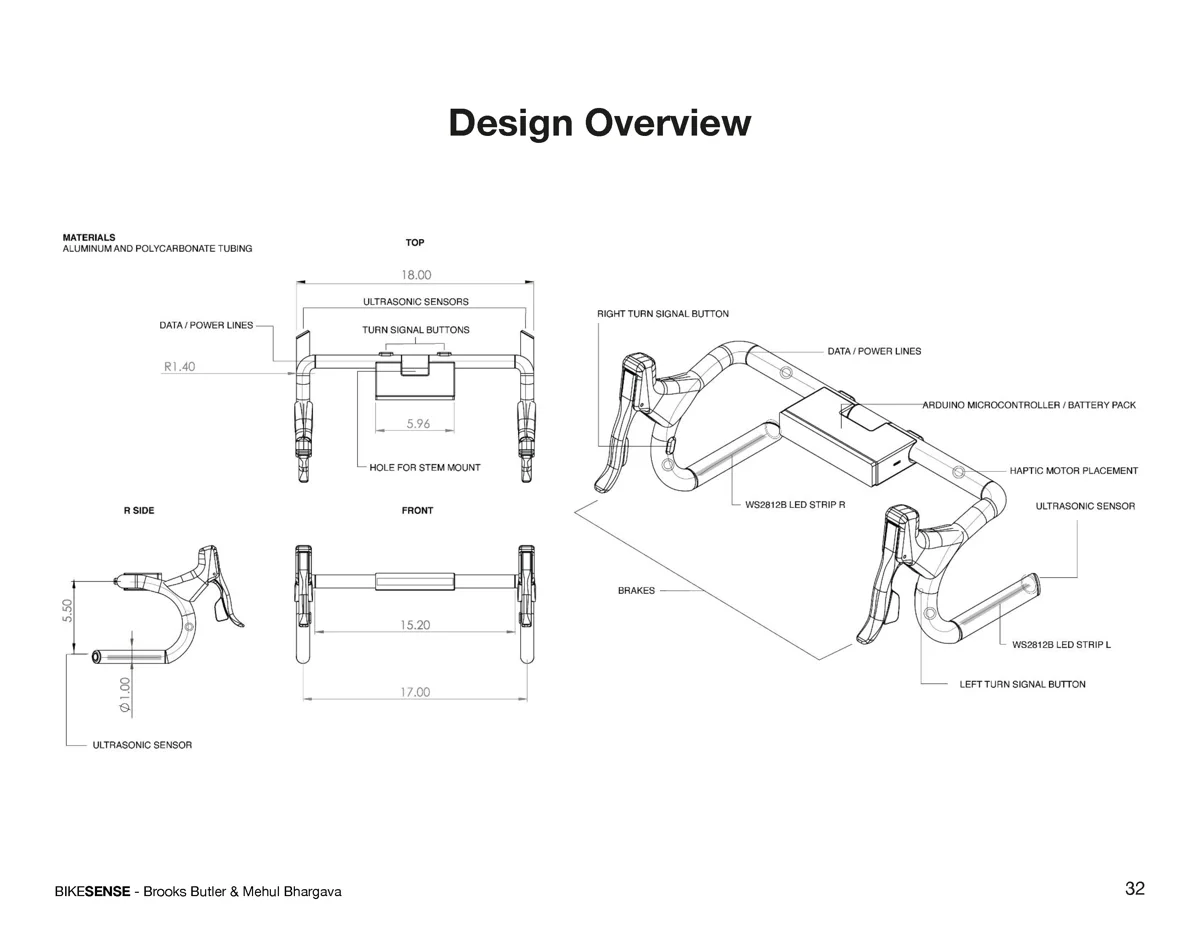
Final design
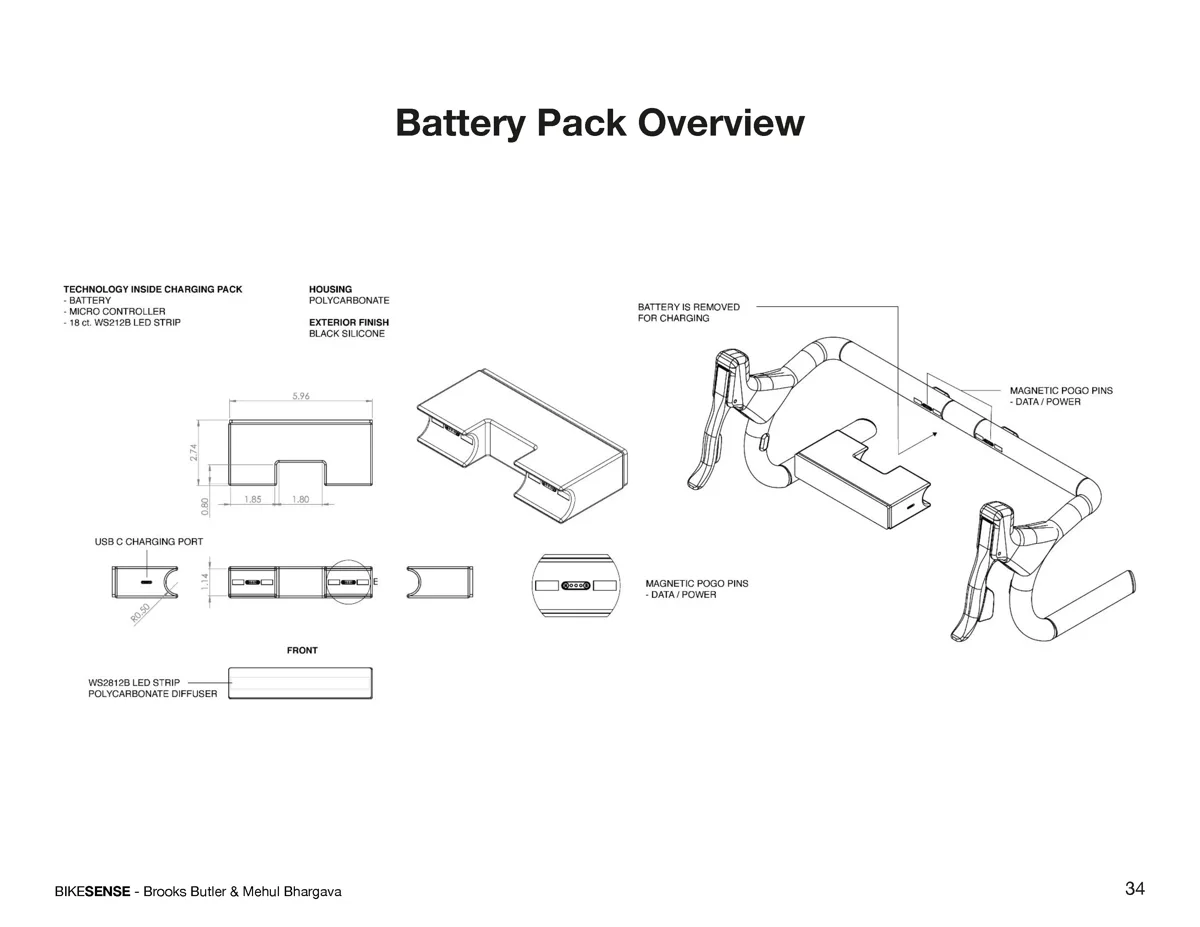
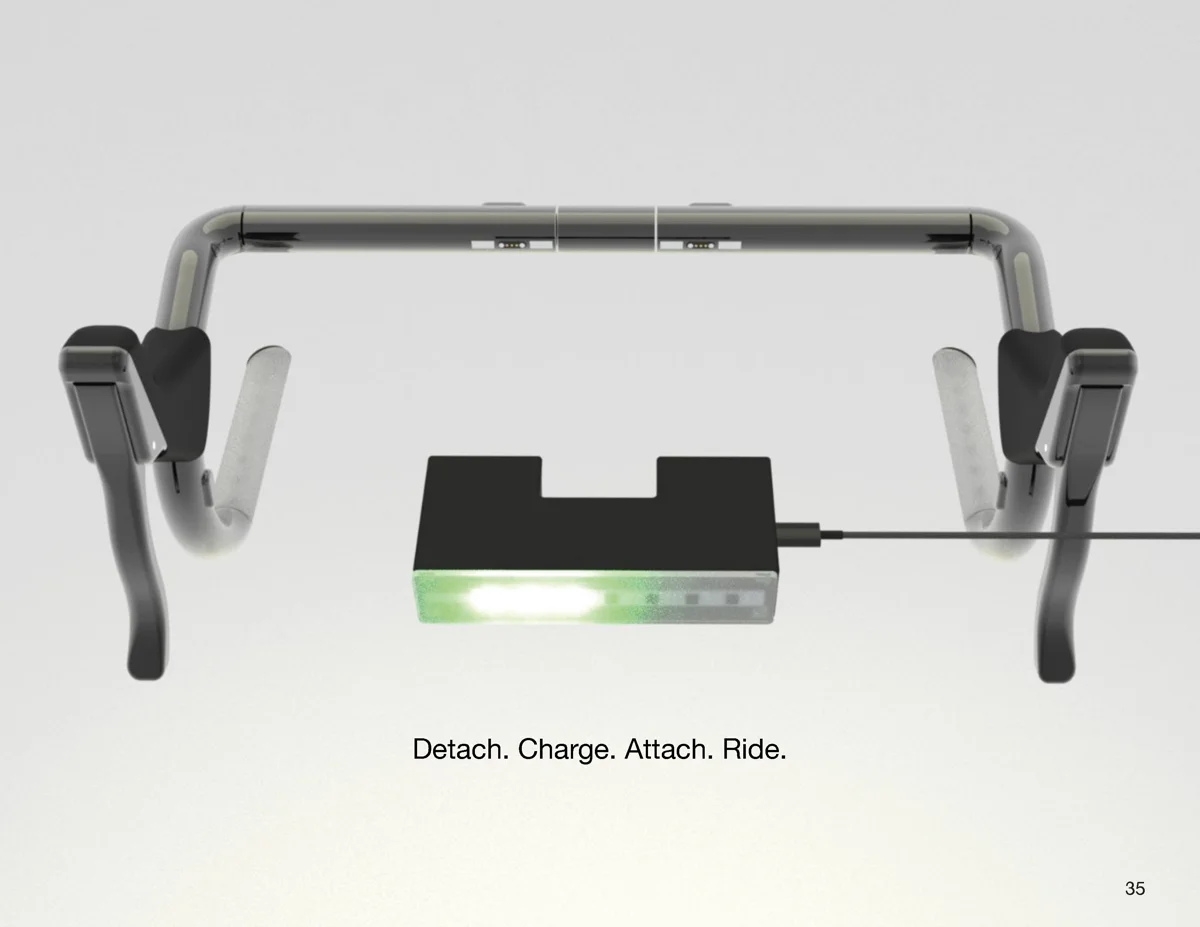
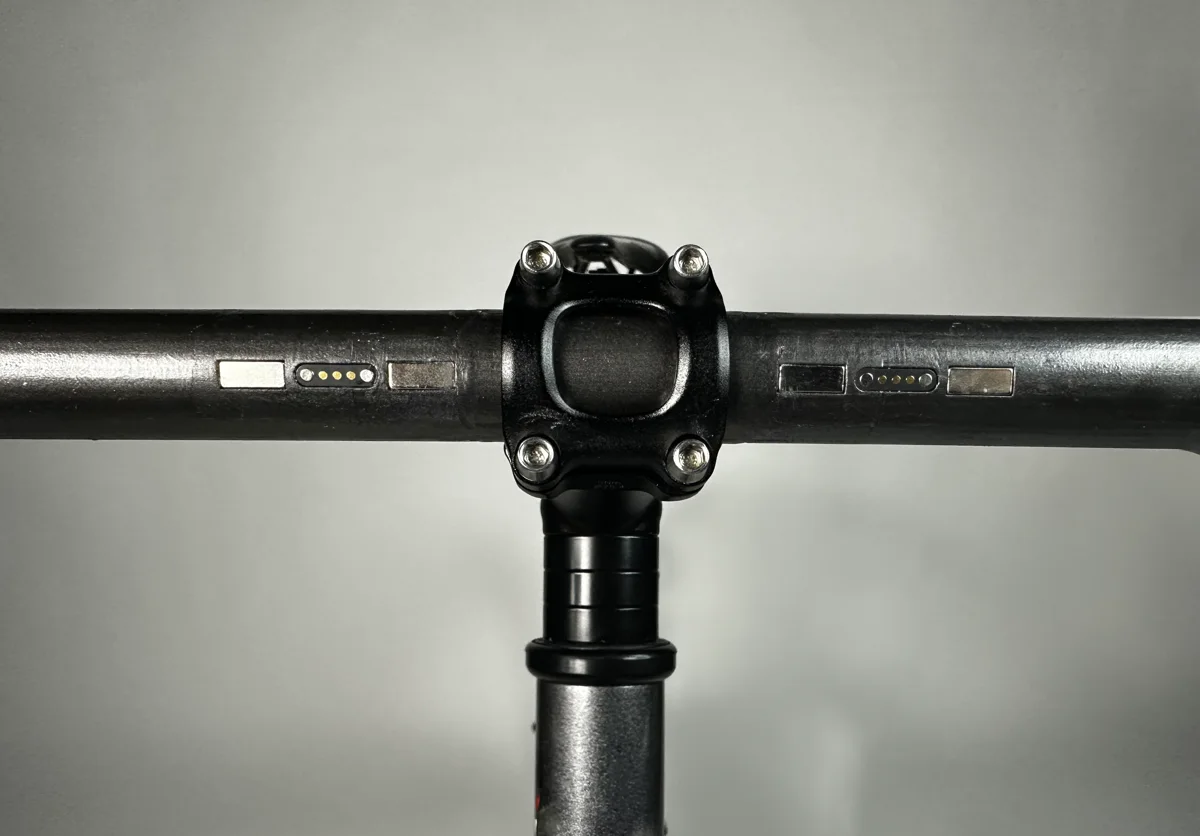
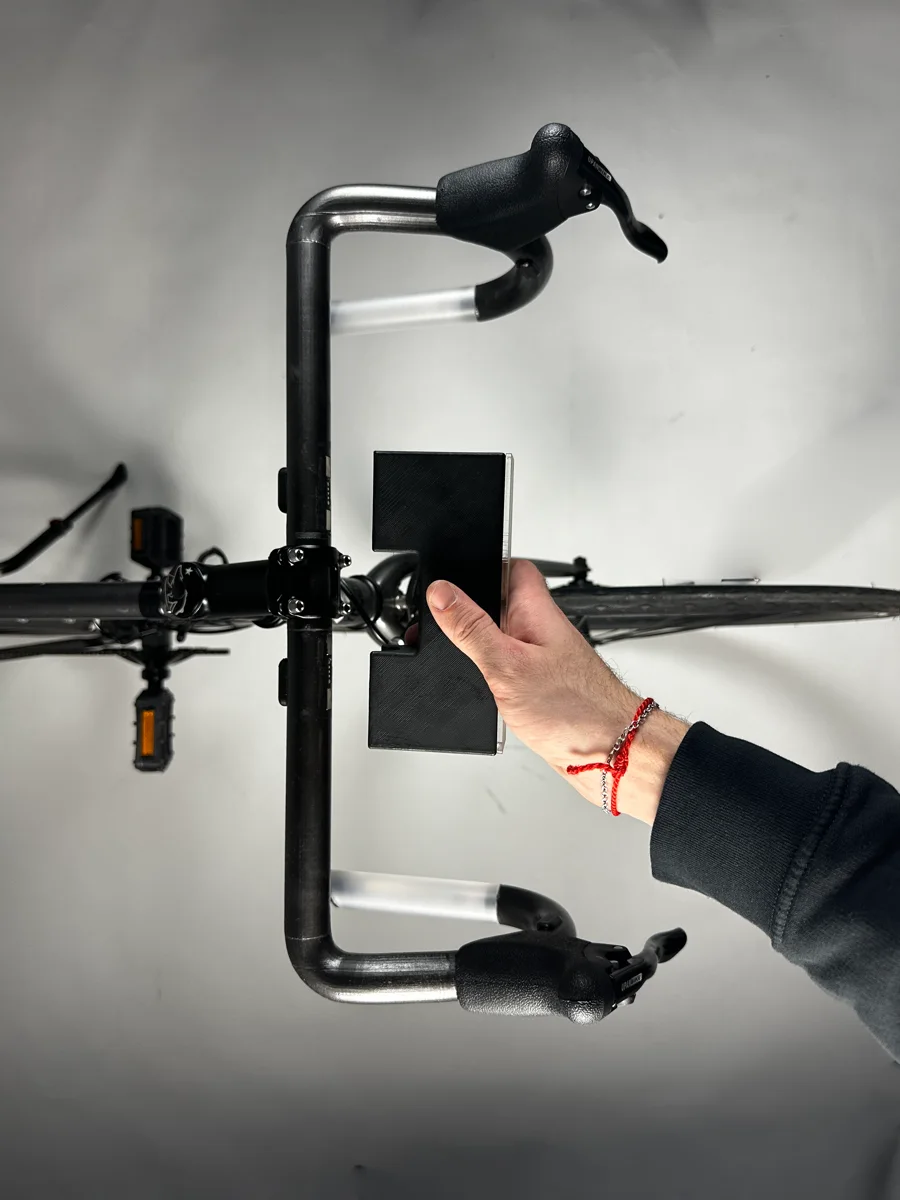
Detach. Charge. Attach. Ride.
Final model
Keep exploring
All work